

Flat roof systems
Designed for performance and flexibility, Gradient’s thermal insulation solutions support a wide range of warm flat roof applications across both new build and refurbishment projects.
Flat roof systems are a critical part of the building envelope, directly influencing thermal performance, durability, and overall building efficiency. For both new build and refurbishment projects, getting the design right means balancing insulation performance, effective drainage, and practical installation - all while meeting increasingly demanding regulatory requirements.
Gradient’s flat roof insulation solutions are designed to support a wide range of warm roof applications, offering flexibility across simple and complex roof designs. Whether working with straightforward build-ups or schemes that require carefully designed falls, penetrations, and detailing, our approach focuses on delivering consistent thermal performance across the entire roof area. Tapered insulation solutions can be integrated to support efficient water drainage, reducing the risk of standing water and helping to maintain long-term roof performance.
Products by application
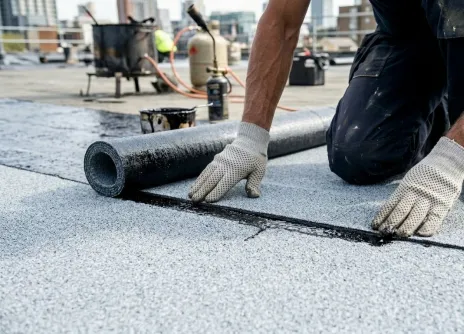
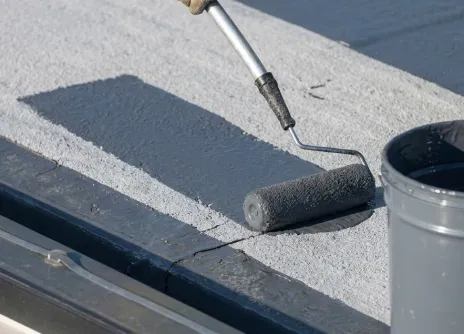

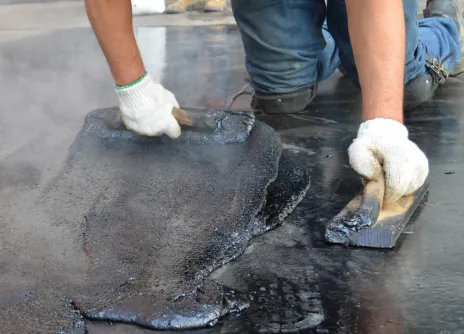
Our flat roofing products

With a thermal performance of the core of lambda 0.006, it's the ideal solution for your renovation or new build projects with ease. Deck-VQ® offers long-term performance whilst maintaining the...

Eurothane® Eurodeck is compatible with mechanically fixed single-ply systems, benefiting from a compressive strength of >150 kPa as noted in our Technical Datasheet and dimensional stability that...
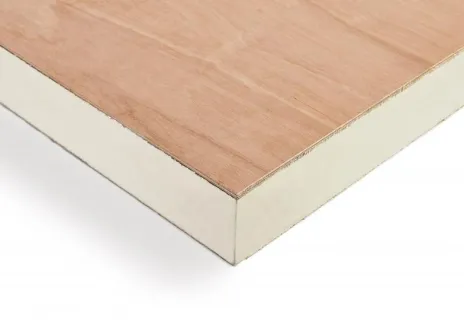
Plylok® consists of an insulation board bonded to a 6mm plywood top layer. Plylok® has a compressive strength of >140 kPa and dimensional stability. A PIR solution for contractors and installers for...

Powerdeck® F is compatible with multiple waterproofing systems, benefiting from a compressive strength of >150 kPa and dimensional stability. This ensures the flat surface finish required for...

Powerdeck® U is a rigid PIR insulation board for use in warm flat roofs with bituminous torch-on felt waterproofing systems. Its stability, compressive strength of >150 kPa as noted in our Technical...
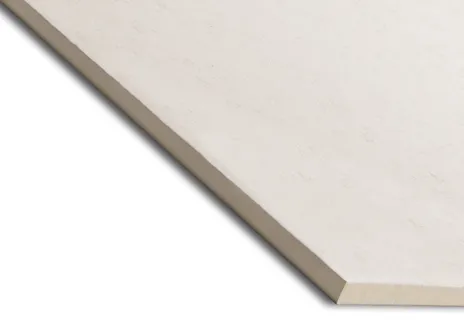
Topcover is a flat roof overlay board for use in combination with PIR boards. It provides added protection to the insulation below in areas of excessive traffic and high loadings.
In addition to its...
Check out our flat roof projects:


Construction law & regulations
Can a breather membrane be laid directly over insulation boards?
Different breather membrane manufacturers have different guidelines for their products, and these should always be consulted prior to installation. It may be possible to lay the breather membrane on the insulation, but with a counter batten airspace above.
If you would like to discuss application of any specific project, please contact our Technical Services.
What air gap is required between insulation and breather membrane?
This should be confirmed in the membrane manufacturer's BBA certificate, though 25mm to 50mm is typical.
Energy efficiency
Can I get a U-value calculated for my flat roofing project?
Absolutely! Please contact our freephone technical helpline on 01543 678777.
Tapered Insulation
Can tapered insulation be used on an existing flat roof?
Yes. Tapered insulation can be designed for both new and existing roofs.
For refurbishment projects, the existing roof construction should be assessed before a tapered insulation scheme is designed. The survey and design should consider the existing roof dimensions, drainage points, falls, obstructions, roof condition and the proposed new roof build-up.
What is a warm flat roof construction?
A warm flat roof is a roof construction where the insulation is positioned above the structural roof deck, keeping the deck and structure on the warm side of the insulation.
A typical warm roof build-up may include the structural deck, vapour control layer, insulation and waterproofing system. The exact arrangement depends on the roof construction and waterproofing system being used. Warm roof construction can provide continuous insulation across the roof, helping to reduce heat loss and improve the thermal performance of the building. The complete roof build-up should be designed to meet the required thermal, moisture, structural and fire performance criteria.
Flat roof & terraces
How can I improve the thermal performance of an existing flat roof?
Improving an existing flat roof's thermal performance may involve adding insulation as part of a refurbishment or overlay system, subject to the condition and construction of the existing roof.
The appropriate solution depends on factors such as:
- Existing roof construction
- Existing waterproofing
- Available build-up height
- Required U-value
- Moisture and condensation considerations
- Drainage
- Existing roof condition
-
Upstands and junctions
Where available space is restricted, high-performance insulation such as vacuum insulation can provide an option for achieving improved thermal performance without requiring the same thickness as some conventional insulation products. Gradient's Deck-VQ® has been used in refurbishment projects where existing roof height and parapet constraints limited the available build-up.
How do I prevent thermal bridging through a flat roof?
Thermal bridging occurs where heat can flow more readily through part of a building element because of a change in material, geometry or construction.
In a flat roof, thermal bridging can occur around areas such as junctions, penetrations, parapets, rooflights and structural elements.
Good design should aim to maintain continuity of insulation wherever possible and address junctions and details appropriately.
The thermal performance of the complete roof build-up should be assessed rather than considering the insulation product in isolation. Accurate U-value calculations can help determine the thermal performance of the proposed construction. Gradient states that its U-value calculations are based on the relevant calculation methodology, including BS EN ISO 6946 for building elements.
What U-value should a flat roof achieve?
There isn't one U-value that applies to every flat roof.
The required performance depends on factors including whether the project is a new build or refurbishment, the type of building, the construction and the applicable Building Regulations and design requirements.
For example, the 2026 Approved Document L Volume 2, covering buildings other than dwellings in England, gives a maximum U-value of 0.18 W/m²K for roofs for new or replacement elements. For new dwellings, the 2026 Volume 1 gives a limiting U-value of 0.16 W/m²K for all roof types.
However, a project may require a different target U-value, so the required performance should be established by the project designer or energy assessor.