
Vacuum Insulation
Vacuum Insulation Panel, also known as VIP, is a new type of insulation solution, which helps you to meet high thermal requirements.
What is a Vacuum Insulation Panel (VIP)?
Roof Terraces: Innovating with Vacuum Insulation
Vacuum insulation or VIP (Vacuum Insulation Panel) is a new type of innovative insulation material that meets very high thermal requirements. With a lambda-value of 0.006 W/mK in the core, the best performance on the market, vacuum insulation offers an efficient technical solution when there is insufficient space to insulate.
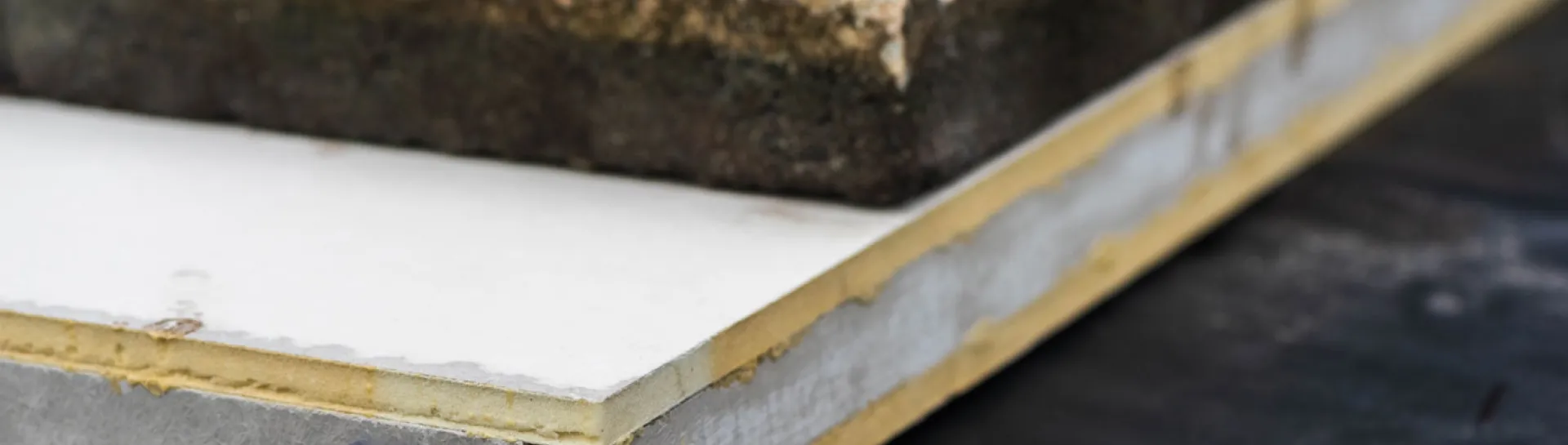
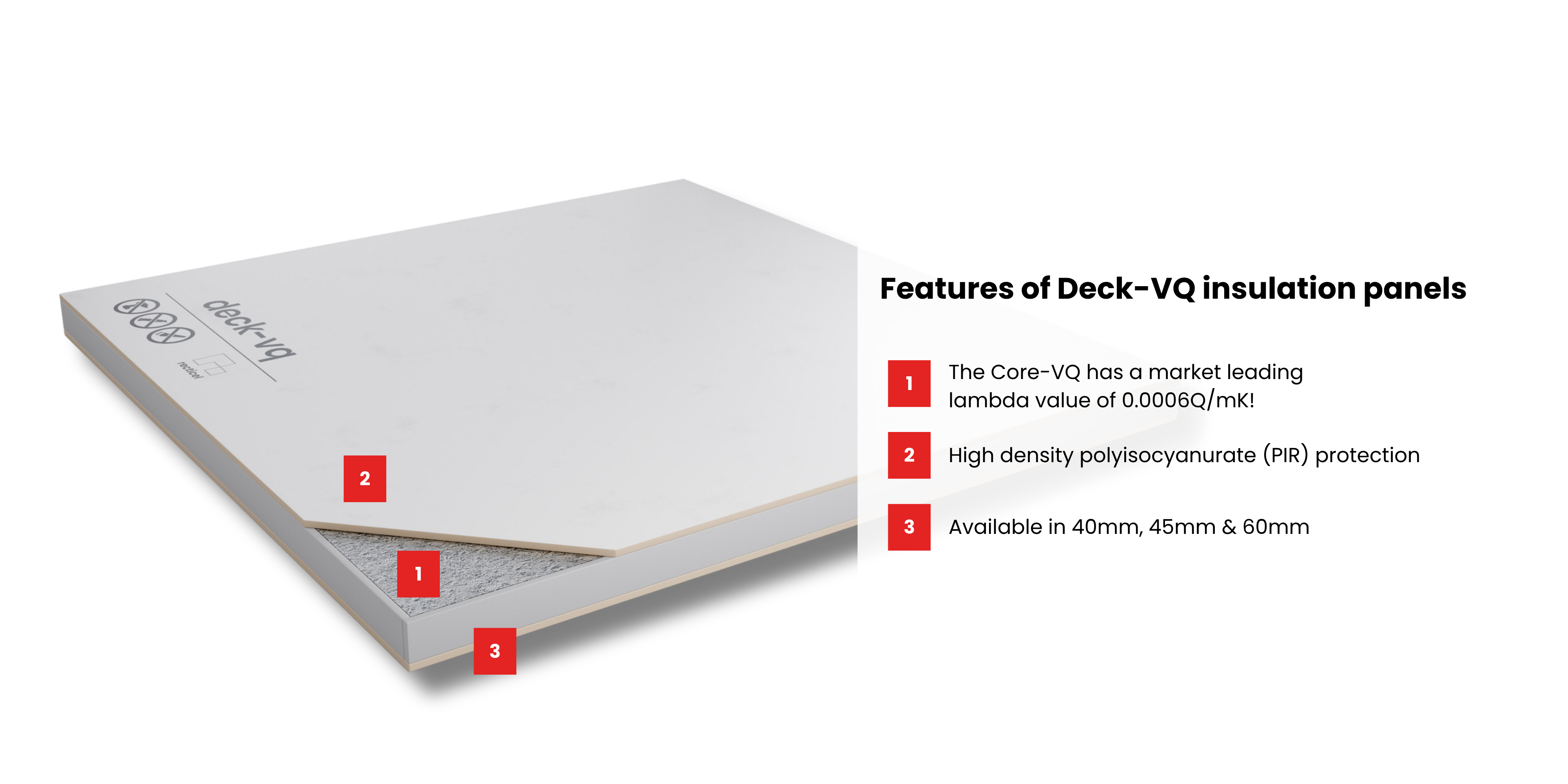
Vacuum insulation panels consist of a core based on pyrogenic silica in a gas-tight multilayer film. This core is encapsulated in a protective casing of rigid, pressure-resistant PIR panels with a high density.
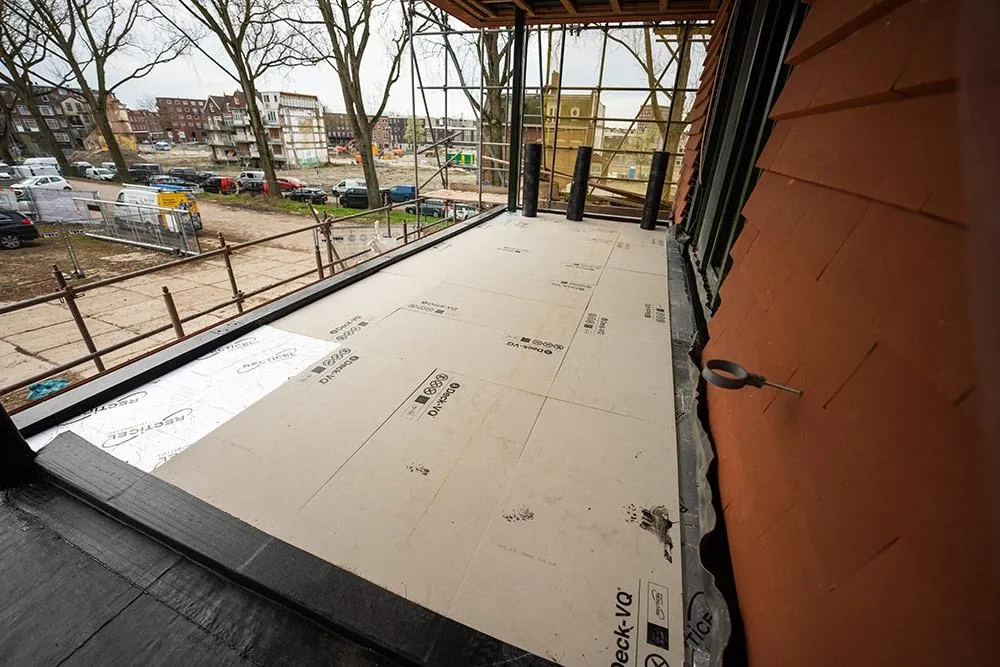
Gradient's Deck-VQ® insulation boards feature a core protected by high-density facing boards. With a declared thermal conductivity of 0.008 W/m·K at just 60mm thickness, Deck-VQ® is suitable for flat roof and terrace renovations where space is limited. In new build applications, it can help reduce construction height, potentially avoiding thresholds and lowering build-up levels. In renovation projects, it may reduce the need to adjust upstands, windows, and doors, while supporting the intended thermal performance.
Delve into the components of Deck-VQ
View our Vacuum Insulated Panel products:

With a thermal performance of the core of lambda 0.006, it's the ideal solution for your renovation or new build projects with ease. Deck-VQ® offers long-term performance whilst maintaining the...
Check out the latest Deck-VQ case studies
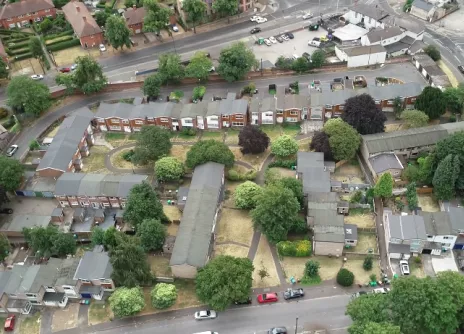


Vacuum insulation
Can I walk on Deck-VQ® vacuum insulation panels?
Yes, this is possible due to the protection layers in high density PIR and the compressive strength of 150 kPa (CS(10\Y)150). Deck-VQ® is suitable for application in flat roofs and terraces, subject to light foot traffic.

As for every type of insulation, we recommend to limit the foot traffic during installation to a minimum and apply the waterproofing as soon as possible after installation. It is best practice to only install the area you are able to insulate AND waterproof in one day.
Can you drill, nail or saw into a Vacuum Insulation Panel?
No, because these actions will lead to the loss of vacuum in the VIP and reduce the thermal performance by a factor of three*.
Our Deck-VQ® concept offers an optimum protection to prevent most damage on site. (see “What is the difference between Deck-VQ® and a Vacuum Insulation Panel?”).
Our technical services provide guidance and deliver a detailed design for your project.
Do not hesitate to contact us for further information.
*The thermal conductivity of the core material rises to ca. 0,020 W/mK under ambient pressure.
What happens if a vacuum insulation panel is damaged?
Damage that penetrates the vacuum insulation panel can cause the vacuum to be lost, reducing its thermal performance.
For this reason, vacuum insulation panels should not be drilled, nailed or sawn.
Gradient specifically states that drilling, nailing or sawing a Vacuum Insulation Panel can cause loss of vacuum and reduce thermal performance. Deck-VQ® incorporates protective high-density PIR layers designed to provide additional protection to the vacuum panel during installation and use.
Installers should follow the manufacturer's installation instructions and avoid activities that could damage the panels.
What is a Vacuum Insulation Panel or VIP?
VIP is the abbreviation of Vacuum Insulation Panel. A Vacuum Insulation Panel generally comprises a microporous core material (e.g. based on fumed silica), which is introduced into a high barrier multilayer foil envelope. The envelope is then evacuated and sealed, obtaining a near vacuum inside the envelope.
Because of the microporous core and the absence of air, excellent thermal properties are obtained. For our Vacuum Insulation Panel as such (Core-VQ®) we can declare a lambda value of 0,006 W/mK, which is typically 3-5 better than traditional insulation materials.
Vacuum Insulation Panels have already been used for several decades in high demanding applications, especially when stringent requirements for thermal insulation are set (e.g. refrigerators). As the thermal insulation of buildings has become increasingly important over the last years, Vacuum Insulation Panels have been introduced in buildings to meet the high standards.
Recticel Insulation offers the following products:

What is vacuum insulation and how does it work?
Vacuum insulation panels, or VIPs, are high-performance insulation panels designed to provide a high level of thermal resistance within a relatively small thickness.
Gradient's VIP technology uses a core based on pyrogenic silica enclosed within a gas-tight multilayer film. The panel is then protected within a high-density, pressure-resistant PIR casing in the Deck-VQ® system.
The vacuum and core structure significantly reduce heat transfer through the insulation, allowing very high thermal performance from a relatively thin panel.
Vacuum insulation is particularly useful where there is insufficient space to accommodate the thickness of conventional insulation.