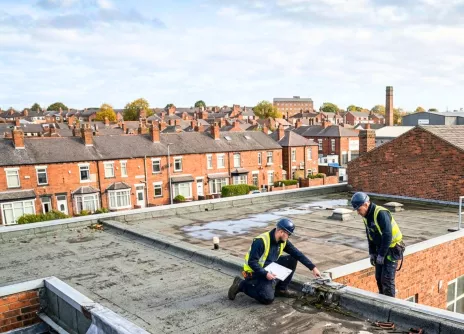
Most flat roof problems don't announce themselves. A membrane doesn't rip open overnight; it perishes slowly at a lap joint nobody's checked in years. A drain doesn't block in a day; it silts up gradually until the first heavy downpour turns your roof into a paddling pool. By the time a leak shows up as a stain on someone's ceiling, the roof has usually been failing quietly for months.
A flat roof survey is how you catch that story before it gets expensive.
What is a flat roof survey?
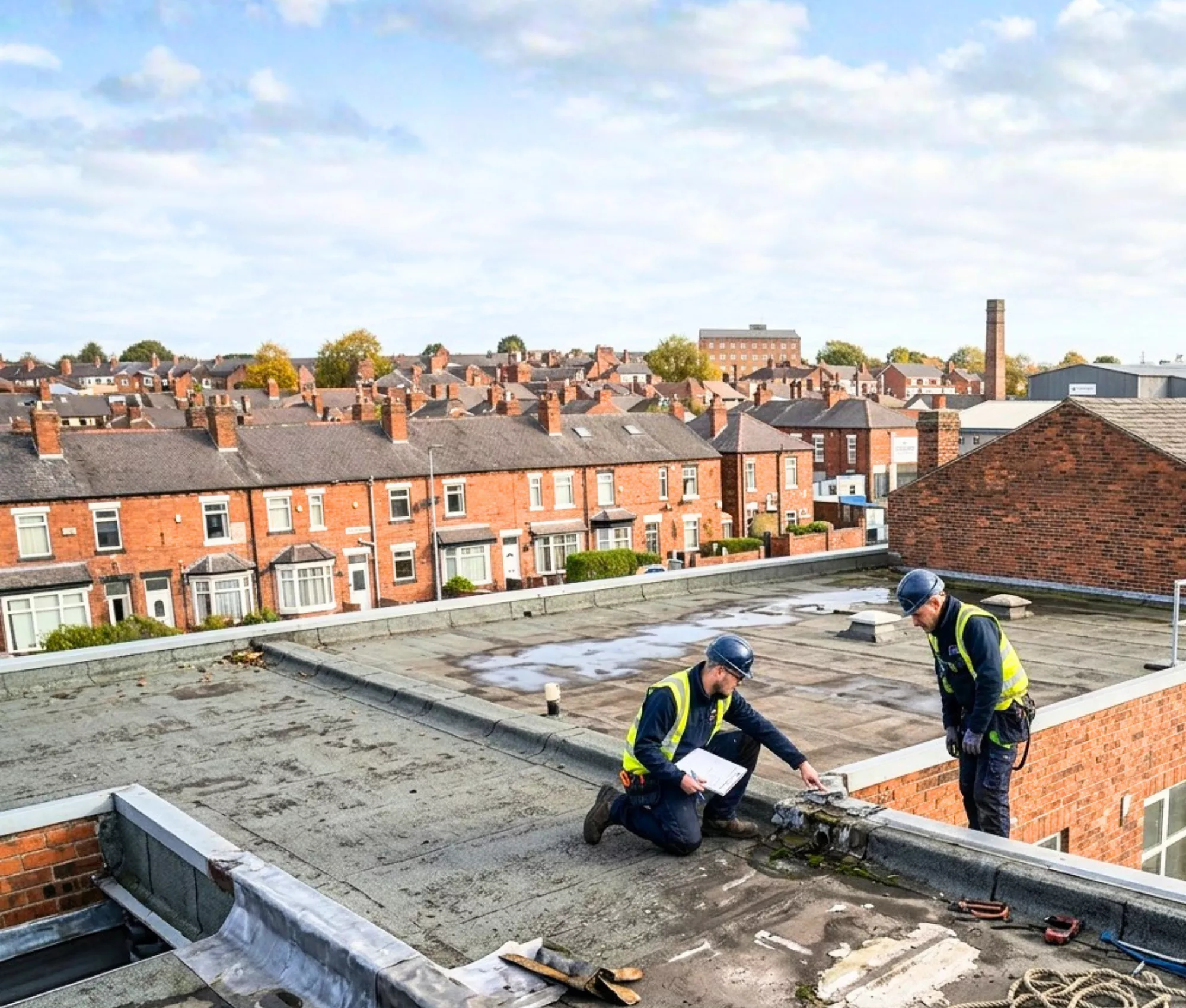
A flat roof survey is a structured, on-site inspection carried out by a trained surveyor to establish the true condition of a roof, not just what's visible from a ladder, but what's actually happening within the build-up. It results in a written report that tells you what's wrong, how serious it is, and what to do about it, in that order.
A good survey prioritises its findings, so you know what's a same-week repair versus something to budget for next year.
Why flat roof surveys matter
Flat roofs are more exposed to standing water, thermal movement, and UV degradation than pitched roofs, and their faults are far less visible from ground level. That combination is exactly why problems tend to go unnoticed until they're serious.
It catches small issues before they become structural ones.
A blocked outlet is a five-minute fix. Standing water left unaddressed can add significant dead load to a deck and accelerate membrane breakdown.
It protects your compliance position.
Roofs are one of the largest thermal elements in a building's envelope, and a survey will flag where insulation is failing to meet current U-value requirements.
It supports insurance and warranty claims.
A documented survey history is often exactly what's asked for if you need to demonstrate the roof has been properly maintained.
It turns unknowns into a budget
Reactive, emergency repairs are almost always more expensive than planned ones.
What does a flat roof survey actually include?
A Gradient survey provides an initial assessment of the visible condition of a flat roof, helping identify potential issues and determine whether further investigation may be required.Leaks and moisture ingress:
Visible defects and moisture concerns
The surveyor looks for visible signs of deterioration, including defective laps, splits, blistering, damaged membrane areas and failed upstands. Where possible, these observations can be considered alongside any known history of leaks or water ingress.
Drainage performance
Visible drainage issues such as blocked outlets, inadequate falls and areas of standing water (ponding) can be identified. These issues can contribute to premature deterioration of the waterproofing system if left unresolved..
Roof and edge details
The surveyor can identify visible signs of movement, deterioration or damage around parapets, perimeter details and other key roof interfaces. Where more detailed investigation is required, further assessment by the membrane manufacturer or specialist roofing contractor may be recommended.
When further investigation is needed
A visual survey cannot determine the full condition of the roof build-up. Where the extent of moisture ingress, insulation levels or the condition of the underlying system needs to be established, an intrusive investigation such as core sampling may be required. This would typically be undertaken by the membrane manufacturer or an appropriately qualified roofing contractor.
Thermal performance
The surveyor can identify visible information about the existing roof build-up where available, but determining the actual condition and thermal performance of the insulation may require further investigation. Core samples and other intrusive testing can help establish the existing build-up, moisture content and insulation levels, allowing a more detailed assessment against current requirements.
How often should you get a flat roof surveyed?
According to BS 6229, the UK's code of practice for flat roofs with continuously supported flexible waterproof coverings, buildings should have at least two formal roof inspections a year, timed for spring and autumn: autumn to clear debris from outlets before winter, spring to assess any damage the winter weather has caused. Beyond that regular cycle, it's worth arranging a survey:
- Before a refurbishment, re-cover, or extension project
- After any severe weather event, such as storms, heavy snow loading, or prolonged flooding
- When you're buying, selling, or taking on management of a building
- If you've noticed any internal signs of a leak, even a small one
What happens after the survey?
You should come away with a written report setting out what was found (with photographic evidence), a priority grading for each issue, and clear recommendations, whether that's repair, refurbishment, or replacement, rather than vague observations. From there, the findings feed directly into a maintenance schedule, a repair quote, or a full insulation and waterproofing scheme designed around the roof's actual condition.
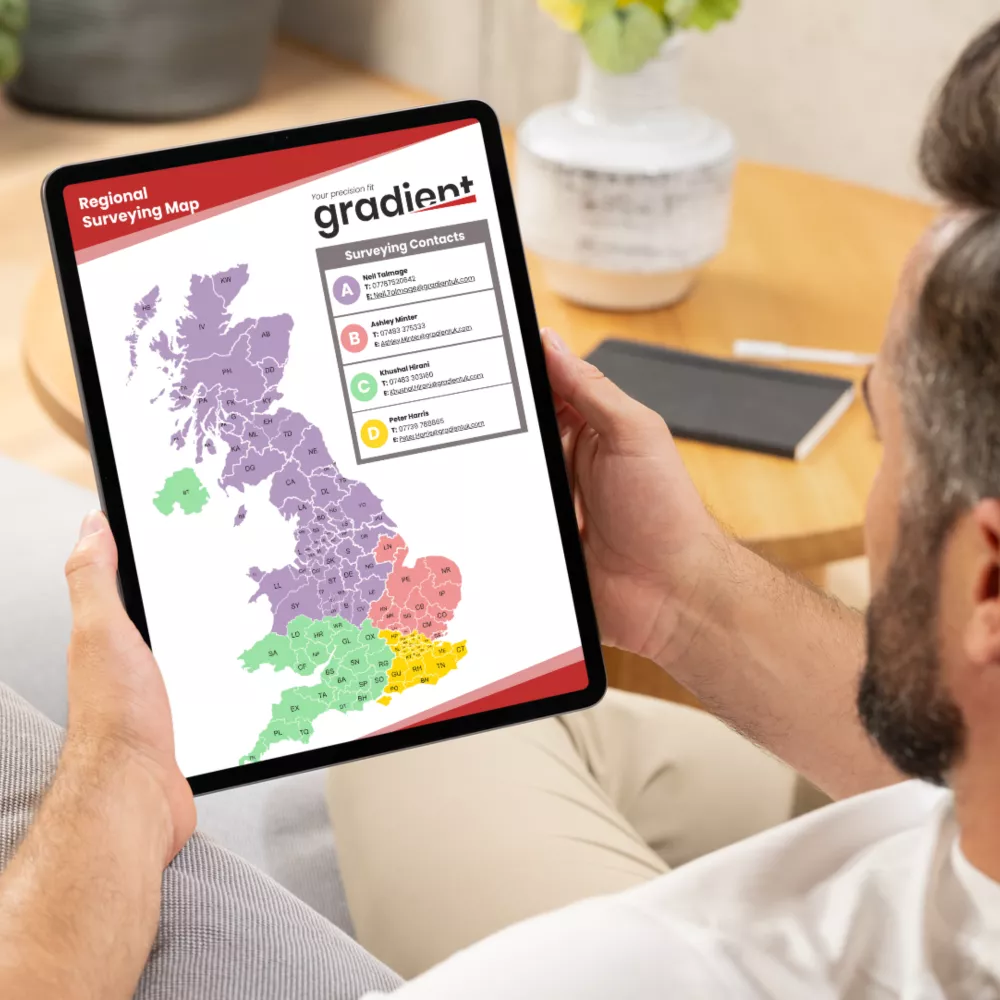
Find your local surveyor
Looking for a Gradient surveyor in your area? Use our Surveyor Map to find your nearest local surveying professional and get in touch to discuss your roofing requirements.
Surveying FAQ's:
Flat roof & terraces
Can a flat roof survey tell me if my insulation is adequate?
Not necessarily. A visual survey may identify information about the apparent roof build-up, but it cannot reliably confirm the condition, moisture content or thickness of concealed insulation. Where this information is required, further investigation such as core sampling may be necessary. The applicable thermal requirements also depend on factors including the building, the work being undertaken and which Building Regulations provisions apply.
Do I need an intrusive survey or core samples?
Not every roof survey requires intrusive investigation. If the purpose is to identify visible defects or drainage issues, a visual assessment may be sufficient. However, where the condition of the underlying roof build-up, moisture levels or insulation needs to be established, intrusive investigation may be recommended. The appropriate scope will depend on the condition of the roof and the reason for the survey.
What problems can a flat roof survey identify?
A visual survey can identify issues such as defective membrane laps, splits, blistering, damaged areas, deteriorated upstands, damaged edge details, blocked outlets and visible ponding water. Ponding is specifically recognised in NFRC guidance as an issue requiring consideration on flat roofs, although its presence does not necessarily mean that a roof has failed.