Sustainability & Circularity
At Gradient, sustainability is woven into every decision we make. Our approach to circularity reaches far past waste reduction, reshaping the full life cycle of our products — from the origins of their materials to how they’re repurposed at the end.
Advancing Recticel’s Sustainability Vision at Gradient
At Gradient, our approach to sustainability is shaped by the broader vision of the Recticel Group, who have spent decades embedding responsible innovation into its core. As part of this global leader in engineered PIR solutions, we inherit a deep commitment to reducing environmental impact, advancing circularity, and designing materials that support a more resilient future. This foundation allows Gradient to push further: applying Recticel’s rigorous standards, scientific expertise, and long‑term sustainability roadmap to rethink how our products are made, used, and ultimately regenerated.
Sustainable Operations, Engineered with Purpose
Reducing transport and emissions
- Optimised packaging and pallet configurations allow more boards to be transported per delivery
- Fewer deliveries mean lower carbon emissions and reduced site congestion
Reducing transport and emissions
- Optimised packaging and pallet configurations allow more boards to be transported per delivery
- Fewer deliveries mean lower carbon emissions and reduced site congestion
Minimising material waste
- Boards are designed and installed from high points to low points, ensuring cuts are made at the thinner end where less material is removed
- The provision of half boards and designed infills enables more precise detailing, reducing unnecessary offcuts
- Mitred board layouts maximise use of available material while maintaining accuracy in complex roof geometries
Where Performance Meets Responsibility: The PIR Difference
Polyisocyanurate (PIR) insulation plays a crucial role in building a more sustainable future and within the Recticel Group, its importance goes far beyond performance. PIR’s high thermal efficiency helps reduce energy use and carbon emissions throughout a building’s lifetime, making it one of the most impactful ways we can contribute to long‑term environmental responsibility. But sustainability doesn’t stop at product performance. Across the Recticel Group, we are committed to ensuring that the materials behind PIR are responsibly sourced, traceable, and part of a circular system that minimises waste and maximises resource recovery.
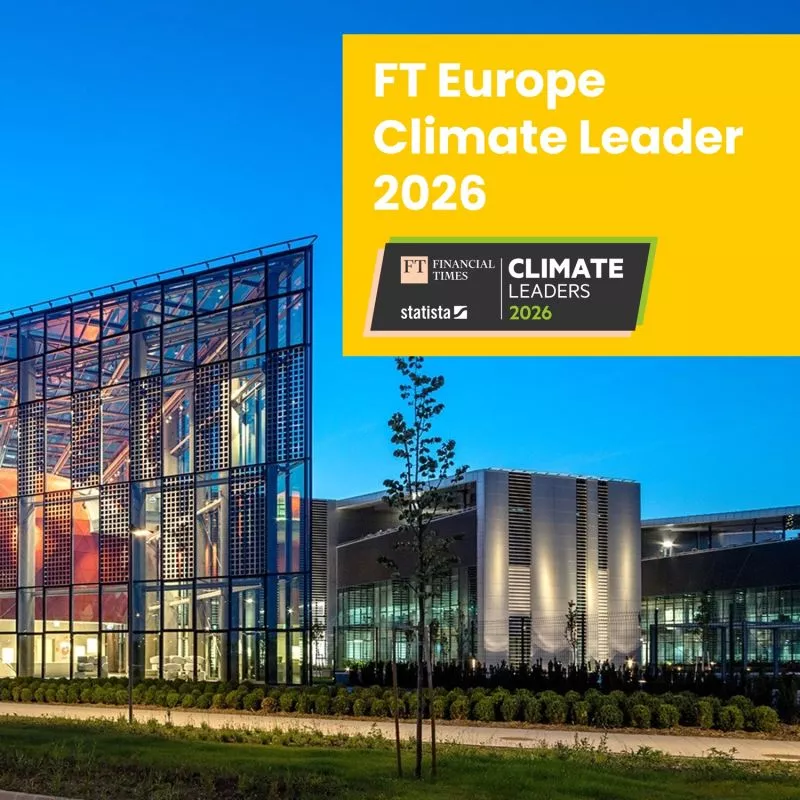
Recticel Group included in Financial Times list of European Climate Leaders
Recticel Group has been included in the Financial Times list of European Climate Leaders for the first time and ranks 89th out of 600 European companies recognized for their progress in reducing the intensity of greenhouse gas emissions.
In the Construction and Building Materials segment, the Recticel Group ranks 10th out of the 48 represented companies. This strong performance underscores the Group's commitment to future-oriented insulation and its ongoing efforts for a more energy-efficient and lower-carbon construction sector.
Stefaan Debusschere, CEO of Recticel Group, stated:
“Being recognized for the first time as one of the European Climate Leaders by the Financial Times is a significant milestone. This recognition reflects the collective commitment and ongoing efforts of our teams to achieve sustainable growth on a large scale and to accelerate the transition to more energy-efficient and circular building solutions.”
Recticel Group: Recognised for Leading Sustainability Performance
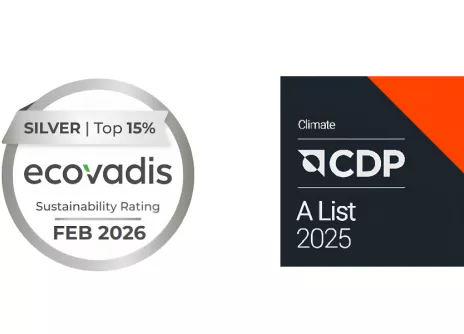
The Recticel Group continues to strengthen its position as a sustainability leader, earning two major recognitions for its environmental and ESG performance. In early 2026, the Group received an EcoVadis Silver Medal for the first time - a significant step up after four consecutive Bronze ratings. This places Recticel among the top 15% of companies assessed globally, reflecting strong progress across key areas including environment, labour and human rights, ethics, and sustainable procurement.
Shortly after, Recticel retained its place on CDP’s prestigious A List for Climate Change for the second year running — the highest rating CDP awards. Out of more than 22,000 companies disclosing climate data, only 877 achieved an A rating, underscoring the Group’s commitment to transparent reporting and long‑term climate action.
These achievements highlight the momentum behind Recticel’s sustainability strategy and reinforce the foundation that supports Gradient’s own efforts in circularity, responsible sourcing, and innovation.
Closing the Loop: Our New Recycled Polyol Plant
Recticel Insulation proudly announces the opening of its new industrial‑scale recycled polyol plant in Wevelgem (Belgium), a major milestone in the company’s long‑term sustainability strategy and a decisive step toward circularity in the insulation sector.
The new facility, developed as part of Recticel’s broader circularity ambition, enables the recycling of post‑industrial PIR (polyisocyanurate) production waste into high‑quality recycled polyol, a key raw material used to manufacture new PIR insulation boards.

Towards Circular, Fundamentally Sustainable Insulation
Gradient continually seeks ways to reduce the environmental impact of its insulation solutions by rethinking their composition and taking cues from nature. One notable example is our multilayer cladding made from PEFC-certified wood fibers. This certification ensures sustainable forest management and full traceability.
A joined-up approach to sustainability
From factory to finished roof, Gradient’s approach ensures:
- Less waste
- Fewer deliveries
- More efficient use of materials
- Better long-term building performance
By integrating sustainability into both manufacturing and on-site application, we help customers deliver projects that are not only compliant, but also more environmentally responsible.
Your Questions on Sustainability, Answered:
Sustainability & circularity
How is polyurethane ecological?
We do everything we can to reduce CO emissions2, but the core of our insulation products is also truly made of environmentally friendly materials.
Eco-friendly synthetic materials may seem strange to you, but with PU insulation, you will save 400 times more energy than they require for their production in 75 years. In short, a good thing for nature.
Sustainable development takes on its full meaning with Recticel Insulation polyurethane insulation:
not only does polyurethane insulation have a very high thermal performance that does not deteriorate over time, but Recticel Insulation polyurethane insulation also significantly reduces the carbon footprint of the insulation.
The proof by four:
1 - The least energy-intensive of all factory-made insulation is polyurethane insulation.
2 – Thinner and more efficient: With the same thermal performance, Recticel Insulation panels are up to 2 times thinner and 5 times lighter.
This reduces the quantities produced and so does the energy required.®
3 – Less bulky for better efficiency: This means fewer trucks to transport them.
4 – Less heavy: CO emissions2 are considerably reduced.
The ecological impact is controlled at all levels and the environment is better preserved.
We need to consume less energy:
Fossil resources such as oil are practically exhausted.
That is why we are advocating for the rational use of this oil.
In concrete terms: we need to burn less oil and use it to produce PU, the high-performance material of which our insulation materials are made.
Today, 96% of oil is used in the form of fuels.
The remaining 4% is processed into synthetic materials, of which only 0.08% is PU.
This is very unfortunate when you know that PU insulation saves 400 times more energy than it requires for its production.
The RECTICEL group acts at the international level, in all its businesses, for the protection of the environment.
What does “circularity” mean for Gradient’s products and processes?
Circularity means designing products and systems that minimize waste and keep materials in use for as long as possible. At Gradient, this includes responsible sourcing, efficient manufacturing, waste reduction, and developing pathways for recycling or repurposing materials at the end of their life cycle, all aligned with Recticel’s circular economy ambitions.
What does PEFC certification mean for Gradient and the Recticel Group?
PEFC certification ensures that the wood‑based materials we use come from sustainably managed forests. For Gradient, this means our sourcing practices align with strict environmental, social, and ethical standards reinforcing the Recticel Group’s commitment to responsible supply chains and traceable, sustainable raw materials.